

Hormone Therapy & BHRT
Hashimoto Disease: What It Means, How It Is Evaluated, and When to Seek Care

Hashimoto’s describes an autoimmune process, not the same thing as hypothyroidism
Hashimoto’s thyroiditis is an autoimmune disorder in which the immune system creates antibodies that may attack the thyroid gland. If thyroid hormone production is impaired, hypothyroidism can result. That relationship matters because the autoimmune process and the thyroid’s hormone output are connected, but they are not identical terms.
Hashimoto disease can therefore be discussed at two levels: what may be happening to the thyroid through an autoimmune process, and whether the thyroid is producing enough hormone. The distinction helps you ask a more precise question than “Do I have a thyroid problem?” You can ask whether the evaluation suggests autoimmune thyroiditis, impaired thyroid function, both, or neither.
Symptoms alone do not establish Hashimoto’s thyroiditis. A clinical evaluation may bring together your symptoms, examination findings, thyroid-related blood tests, and imaging when appropriate. Use this distinction to prepare for care, not to label your own condition from a symptom list or a single laboratory value.
Why thyroid function matters
Thyroid function is assessed through the relationship between thyroid hormones and thyroid-stimulating hormone, or TSH. TSH is produced by the pituitary gland. When the pituitary detects low thyroid hormone levels in the blood, it sends TSH to the thyroid to encourage increased hormone production.
A high TSH level indicates hypothyroidism, while a low blood level of T4 supports that the problem is within the thyroid itself. T4 means thyroxine, one of the thyroid-related hormones considered during evaluation. A healthcare professional may also test T3 and thyroid-related antibodies, depending on the clinical question.
The practical meaning of a result depends on what it measures. Antibody testing addresses an autoimmune component; TSH and T4 address thyroid function. Those results answer related questions, not the same question. If you are reviewing laboratory paperwork, write down the test name and ask which part of the evaluation it addresses instead of treating every thyroid result as interchangeable.
Symptoms can raise a question but cannot answer it
Concerns such as fatigue, weight gain, brain fog, low mood, and restless sleep can prompt a thyroid discussion, but they can have other causes and do not identify Hashimoto’s thyroiditis by themselves. The American Thyroid Association describes an evaluation that may involve symptoms of hypothyroidism together with an elevated TSH level, with or without a low free or total T4 level. Hashimoto’s thyroiditis can also be present without symptoms when thyroid antibodies are high and thyroid hormone levels are normal.
Symptoms can therefore point toward a question without settling its answer. A symptom pattern may fit reduced thyroid function, an autoimmune process with normal thyroid hormone levels, or another explanation that requires clinical assessment. Your useful task is to describe what you notice clearly: when it began, whether it is persistent, and how it affects your daily activities. That information gives a healthcare professional context for interpreting examination findings and tests.
A symptom journal should support a conversation, not replace it. Bring a short record of your main concern, the changes you have noticed, relevant previous thyroid results, and questions about which tests may be appropriate. Do not use the journal to conclude that a particular symptom proves Hashimoto’s or hypothyroidism.
Hashimoto’s can be present before thyroid hormone levels become abnormal
Hashimoto’s thyroiditis can be present even without symptoms when thyroid antibodies are high and thyroid hormone levels are normal. This finding separates the presence of an autoimmune thyroid process from the question of whether thyroid hormone production is currently impaired.
Thyroid antibody testing can support an evaluation for Hashimoto’s thyroiditis. Antibodies discussed in the clinical material include thyroid peroxidase antibodies and thyroglobulin antibodies. A positive antibody result is useful information to discuss with a healthcare professional, but it does not give you a complete interpretation of thyroid function on its own.
An ultrasound may or may not be needed when Hashimoto’s thyroiditis is being evaluated. If an ultrasound is performed, it can show inflammation, including when thyroid hormone levels are still normal. Ask what clinical question an ultrasound is meant to answer rather than assuming that imaging is required for every thyroid evaluation.
What a Hashimoto’s evaluation generally brings together
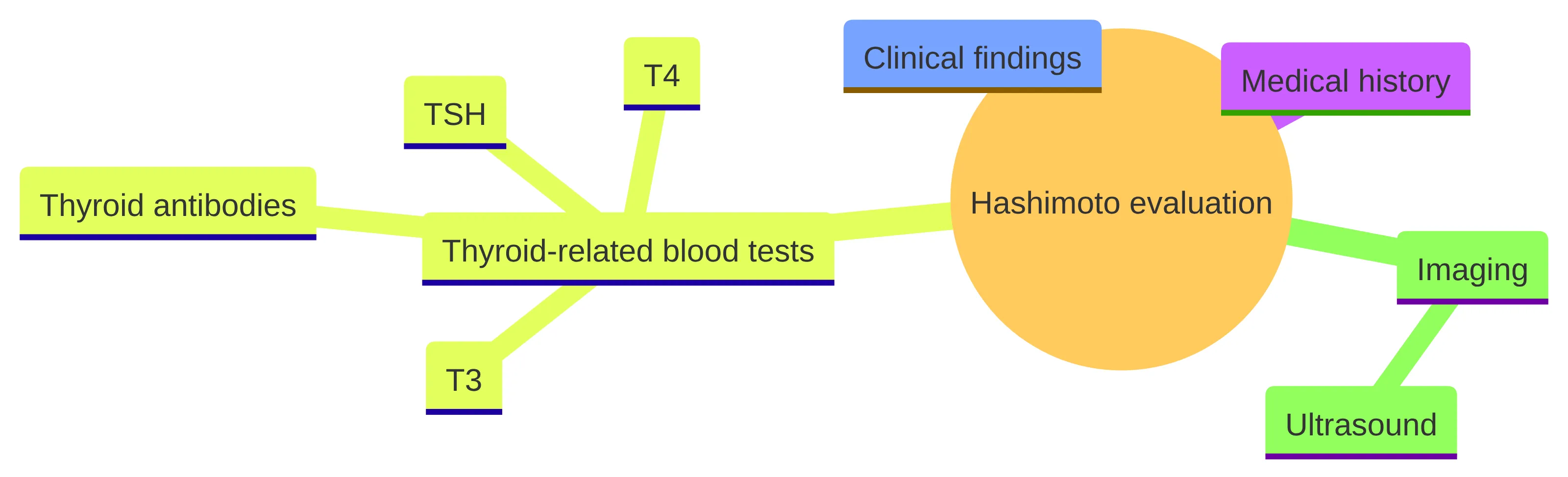
A Hashimoto’s evaluation generally brings together your medical history, clinical findings, thyroid-related blood tests, and imaging when additional information is needed. No single part should be treated as the entire evaluation. The purpose is to connect what you are experiencing with findings that address autoimmune thyroiditis and thyroid function. History provides context for symptoms and previous results, while clinical findings may add information such as thyroid enlargement or other neck findings. Laboratory tests can address TSH, T4, sometimes T3, and thyroid-related antibodies. If recommended, ultrasound can add information about inflammation, thyroid size, or nodules. These parts answer different questions: symptoms and examination describe the clinical picture, laboratory findings address thyroid function and the autoimmune component, and imaging can provide additional structural information. Bringing them together does not mean every person needs every test. It means the healthcare professional can explain why a particular test or examination finding matters and what remains uncertain after it is reviewed.
Your history gives the healthcare professional the context for the evaluation. Describe symptoms of concern, previous thyroid results, and any known thyroid enlargement or neck findings. The examination may identify diffuse swelling of the thyroid or other clinical findings that need further assessment. These findings are considered alongside laboratory results rather than used as a diagnosis by themselves.
Thyroid-related blood testing may include the following items:
- TSH: a signal produced by the pituitary gland that helps assess thyroid function.
- T4: the main thyroid hormone measured in the cited diagnostic guidance.
- T3: a test that may be included in some thyroid evaluations.
- Thyroid antibodies: blood tests may also check for antibodies that affect thyroid function.
The exact group of tests depends on the clinical question being assessed.
A healthcare professional may recommend an ultrasound to assess thyroid size or nodules. Ultrasound can also show inflammation when it is performed during an evaluation for Hashimoto’s thyroiditis. Imaging is not automatically required in every case, so ask what additional information it would provide for your situation.
Why symptoms and TSH are interpreted together
TSH is interpreted with symptoms and other thyroid findings because it addresses thyroid function rather than the autoimmune question by itself. A high TSH level indicates hypothyroidism, while a low T4 level supports that the problem is within the thyroid itself.
A TSH result answers a thyroid-function question; it does not, by itself, identify every cause of that result. Hashimoto’s thyroiditis may be considered when symptoms of hypothyroidism occur with an elevated TSH, with or without a low free or total T4. Thyroid antibodies can support the autoimmune part of the evaluation. Ask how your clinician is connecting these findings rather than asking what one number means in isolation.
Use these questions to keep the interpretation focused:
- What does my TSH result measure?
- Was T4, and possibly T3, included for a specific reason?
- Were thyroid antibodies measured, and which antibodies were tested?
- Do my symptoms and examination findings change how the results are understood?
- Is imaging needed to assess thyroid size, inflammation, or nodules?
These questions help you ask for an explanation without attempting to interpret the results yourself.
Normal thyroid hormone levels do not explain every ongoing symptom
Persistent symptoms can occur in people with Hashimoto’s disease who have normal thyroid hormone levels, and some studies support a possible relationship between thyroid autoimmunity and those symptoms. The available research does not show that thyroid function tests explain every persistent symptom. Normal thyroid hormone levels therefore answer one part of the question without automatically explaining how you feel.
One cited cross-sectional study included 199 adults with autoimmune hypothyroidism and TPO-antibody levels above 60 IU/L. In that study, quality-of-life scores were not associated with thyroid function tests, while TPO-antibody levels were associated with goiter symptoms, depression, and anxiety in a multivariate model. That result describes an association in one study; it does not establish that antibody levels caused those experiences or that the same pattern applies to you.
A normal thyroid hormone result should lead to a clearer conversation, not a forced conclusion. Ask whether the evaluation supports autoimmune thyroiditis, whether thyroid function appears impaired, and what other clinical questions remain open. Keep the boundary in view: persistent symptoms deserve discussion, but they do not prove that Hashimoto’s is the explanation.
What the available evidence can and cannot say about treatment
A general treatment and follow-up discussion starts by separating the autoimmune process from its effect on thyroid function. Hashimoto’s thyroiditis can exist with normal thyroid hormone levels, while impaired thyroid hormone production can result in hypothyroidism. The distinction helps frame which findings are being monitored and what changes should prompt another discussion; it does not determine an individual treatment plan. General information can describe the questions that shape care, but it cannot select a medication, dose, supplement, or monitoring interval for a particular person. The relevant conversation is whether thyroid hormone production is impaired, what the available findings show about autoimmune thyroiditis, and which part of the evaluation needs follow-up. When thyroid hormone levels are normal, that result does not by itself explain every persistent symptom or settle the significance of thyroid antibodies. When function appears impaired, a healthcare professional can explain the care options and follow-up that fit the clinical findings. Those decisions belong to the clinical conversation rather than to an online conclusion. Follow-up questions can clarify what should be watched over time and what new information would change the discussion, without assuming that an antibody result or symptom on its own dictates care.
Do not choose treatment from symptoms, antibody results, or an online explanation alone. Ask a healthcare professional to explain what the findings mean together, whether thyroid function is impaired, and what follow-up is appropriate for the pattern identified. This approach keeps an antibody result from being treated as a complete treatment decision.
A useful treatment and follow-up conversation can include these questions:
- What finding is the care plan intended to address?
- Which part of my evaluation will be followed over time?
- What changes in symptoms or thyroid-related results should prompt another discussion?
- If thyroid function is normal, what does that mean for the current plan?
- If thyroid function is impaired, what options and follow-up should we discuss?
These questions prepare you for shared clinical decision-making without turning general information into an individualized prescription. Monitoring connects changes in symptoms, examination findings, and relevant thyroid testing with the question the evaluation is meant to answer. Ask what would change the plan and what follow-up is intended to clarify.
When persistent or concerning concerns merit professional evaluation
Professional evaluation is appropriate when symptoms concern you, when you have a known or suspected thyroid enlargement, or when thyroid-related results need explanation. The described evaluation may combine clinical findings with blood tests and, when appropriate, imaging. Arrange a clinical conversation rather than trying to settle the question through symptoms alone.
A lack of symptoms does not automatically close the question. Hashimoto’s thyroiditis can be present when thyroid antibodies are high and thyroid hormone levels are normal. If testing has raised that possibility, discuss the result with a healthcare professional and ask what it means for your thyroid-function evaluation.
Bring professional attention to the specific concern that prompted you to search:
- symptoms that may fit hypothyroidism;
- an elevated TSH or low T4 result;
- thyroid antibody results;
- an enlarged thyroid or a question about nodules; or
- persistent symptoms despite normal thyroid hormone levels.
These concerns do not diagnose Hashimoto’s, but they give you a concrete reason to request an evaluation and ask focused questions.
Questions to bring to a thyroid evaluation
Questions for a thyroid evaluation should help you separate autoimmune findings from thyroid-function findings. Write down the questions that match your concern and bring your available results to the appointment.
A useful way to prepare is to make a three-column note: the information you have, the question that information may help answer, and the question it cannot answer by itself. For example:
- Symptoms: Record when the concern began, whether it has continued, and how it affects daily activities. This can describe the clinical picture, but it cannot establish Hashimoto’s or identify the cause on its own.
- Thyroid-function results: List the test names, such as TSH or T4, with the available results. Ask what each result says about thyroid function, while leaving the interpretation to the healthcare professional.
- Antibody results: Note whether thyroid peroxidase or thyroglobulin antibodies were measured. Ask what those findings contribute to the autoimmune evaluation and how they relate to the other findings.
- Examination or imaging concerns: Note any known thyroid enlargement, neck finding, or question about a nodule. If ultrasound is discussed, ask what additional information it is intended to provide about inflammation, thyroid size, or nodules.
- Unanswered questions: Write down what remains unclear after reviewing the information. This might include whether the findings suggest autoimmune thyroiditis, impaired thyroid function, both, or neither.
This format helps prevent one symptom, antibody result, or TSH value from becoming the entire explanation. It also gives the conversation a clear sequence: describe the concern, identify what has been measured, ask what each finding addresses, and clarify what still requires clinical judgment. If symptoms continue while thyroid hormone levels are normal, include that fact as an unresolved question rather than treating it as proof that Hashimoto’s is or is not responsible. The purpose of the worksheet is not to calculate a diagnosis; it is to make the available context easier to review and to help you leave with a clearer understanding of the next clinical question.
To clarify the condition
- Could my findings fit Hashimoto’s thyroiditis, hypothyroidism, both, or neither?
- What does the autoimmune part of the evaluation show?
- Can Hashimoto’s be present even if my thyroid hormone levels are normal?
- Which finding supports your assessment, and which question remains open?
To understand testing
- What do my TSH and T4 results indicate about thyroid function?
- Is T3 needed for the question being assessed?
- Were thyroid peroxidase or thyroglobulin antibodies tested?
- Would an ultrasound add information about thyroid inflammation, size, or nodules?
- How do my history and examination findings fit with the laboratory results?
To discuss ongoing symptoms
- Could my symptoms reflect impaired thyroid function, thyroid autoimmunity with normal hormone levels, or another concern?
- What does the normal thyroid hormone result explain, and what does it leave unanswered?
- Which symptoms should I track before follow-up?
- What information would help you reassess the situation?
To discuss care and follow-up
- Is thyroid hormone production impaired in my case?
- What is the purpose of the proposed care plan?
- Which findings will be followed over time?
- When should I return to discuss symptoms or thyroid-related results?
- What should I do if my concerns continue while thyroid hormone levels remain normal?
A healthcare professional can decide which questions apply to your history and examination.
Use informed questions to decide your next clinical conversation
Your next step is to separate three questions: whether an autoimmune thyroid process is present, whether thyroid hormone production is impaired, and what your symptoms and examination findings add to the picture. Symptoms can prompt evaluation, antibodies can support an autoimmune assessment, and TSH and T4 can help assess thyroid function. None of those pieces should be used alone to diagnose you.
Request help with an order using the Website order-help request.
What should I ask a healthcare professional about possible Hashimoto’s disease?
What is Hashimoto disease and how does it relate to thyroid function?
Hashimoto disease, or Hashimoto’s thyroiditis, is an autoimmune disorder where the immune system creates antibodies that may attack the thyroid gland. This can impair thyroid hormone production, leading to hypothyroidism. Understanding this relationship is important for evaluating thyroid health.
When should I seek medical care regarding Hashimoto disease?
You should seek medical care if you experience concerning symptoms such as persistent fatigue, weight changes, or if you have abnormal thyroid test results. A healthcare professional can help determine the need for further evaluation.
What tests are involved in diagnosing Hashimoto disease?
Diagnosis may include blood tests for TSH, T4, and thyroid antibodies. An ultrasound may also be performed to check for thyroid inflammation or enlargement, depending on the clinical situation.
Can Hashimoto disease be present without symptoms?
Yes, Hashimoto disease can be present even when thyroid hormone levels are normal and without noticeable symptoms.
What questions should I ask my healthcare provider about Hashimoto disease?
Consider asking about the implications of your test results, whether your symptoms align with Hashimoto disease, what further evaluations may be needed, and what treatment options are available.
Hormone therapy
Wondering if your hormones are behind how you feel?
Dr. Brian Hoff sees patients at our boutique, cash-based practice in downtown Fredericksburg, VA — with time to listen and a plan built around you.
More on Hormone Therapy & BHRT
See hormone therapy Hormone Therapy & BHRT
Hashimoto’s Disease: Symptoms, Evaluation, and What to Discuss With a Healthcare Professional
Learn what Hashimoto disease is, how thyroid function can vary, what evaluation may involve, and what to ask a healthcare professional.
Read article Hormone Therapy & BHRT
Hashimoto Disease: How Autoimmunity, Symptoms, and Thyroid Tests Fit Together
Understand Hashimoto disease, its symptoms, thyroid tests, and what to ask a healthcare professional about evaluation and monitoring.
Read article Hormone Therapy & BHRT
10 Benefits of Hormone Replacement Therapy Near You
Discover the transformative benefits of hormone replacement therapy near me for enhanced well-being.
Read article