

Hormone Therapy & BHRT
Hashimoto Disease: How Autoimmunity, Symptoms, and Thyroid Tests Fit Together

Hashimoto disease is an autoimmune process, not a single test result
Hashimoto disease is an autoimmune thyroid disorder in which immune-system activity targets thyroid antigens. Genetic predisposition and environmental triggers may both contribute to how the condition develops. That description explains the underlying immune process, not whether your thyroid is making enough hormone on a particular day.
Hashimoto’s thyroiditis is also called chronic lymphocytic thyroiditis. The condition may be associated with hypothyroidism, a goiter, or both, but those clinical findings are not interchangeable with the autoimmune process itself. Separating these ideas gives you a clearer way to understand symptoms, laboratory findings, and conversations about care.
A thyroid discussion becomes more useful when you ask four separate questions: Is there evidence of thyroid autoimmunity? How is thyroid function measuring? What symptoms or examination findings are present? What monitoring, if any, is appropriate? A healthcare professional can use those pieces together rather than treating one result as the entire answer.
What Hashimoto disease means for the thyroid
Hashimoto’s thyroiditis means that immune activity is directed toward thyroid tissue and thyroid-related targets. The condition is associated with two clinical patterns named in the medical literature: hypothyroidism, a goiter, or both.
Thyroid function tests address how the thyroid is functioning, while antibody testing addresses part of the autoimmune picture. Ultrasound imaging, when appropriate, can add information about the thyroid itself. These categories help explain why a clinician may consider more than one type of finding when evaluating possible Hashimoto’s thyroiditis.
A suspected autoimmune process does not automatically tell you how your thyroid function will measure, and a thyroid-function result does not by itself describe every aspect of thyroid autoimmunity. Treat each result as one part of a clinical discussion rather than as a stand-alone diagnosis. The practical question is how the result fits with your symptoms, examination findings, and other testing.
Why Hashimoto disease may exist before thyroid hormones become abnormal
Thyroid autoimmunity and thyroid hormone status are related but distinct questions. If you have Hashimoto’s disease, symptoms can continue even when thyroid hormone levels are in the normal range. A normal hormone result can describe thyroid function at the time of testing without answering every question about immune activity or how you feel.
The distinction matters because evaluation may include symptoms and examination findings alongside thyroid function tests, thyroid antibodies, and, when appropriate, ultrasound imaging. A result that looks reassuring in one category may still need to be interpreted with findings from the other categories. That is a reason to discuss the complete pattern rather than assuming that one normal measurement settles the issue.
A focused thyroid conversation can clarify what a normal hormone result does and does not show. Ask whether additional evaluation is appropriate, which part of the thyroid picture each test addresses, and how follow-up would work. The useful next step is a discussion about the whole pattern, not an attempt to label the condition from symptoms or a single laboratory value.
Thyroid hormone levels and autoimmune findings can therefore answer different questions at the same appointment. Your symptoms may remain relevant even when one category appears normal, but that does not establish that thyroid autoimmunity explains every symptom. Ask your clinician to identify which question each result answers and which questions remain open.
Symptoms can raise a question without confirming Hashimoto disease
Symptoms and examination findings can raise a question about Hashimoto’s thyroiditis, but they do not confirm it by themselves. The condition may involve hypothyroidism or a goiter, and a study of autoimmune hypothyroidism examined goiter symptoms, depression, anxiety, and other persistent symptoms. These features need context because the same experience can be relevant to more than one health question.
Clinical evaluation combines the way you feel and what an examination shows with thyroid function tests, thyroid antibodies, and, when appropriate, ultrasound imaging. That combination is the practical boundary between noticing a possible pattern and deciding what the pattern means. Symptoms can justify a professional discussion without serving as proof of an autoimmune thyroid disorder.
Persistent or disruptive symptoms, or a concern about thyroid enlargement or function, are reasons to arrange a discussion with a healthcare professional. Bring a concise description of what you have noticed, when it began, and whether it has changed. Then ask which findings and tests are relevant to your situation.
A symptom record can make that conversation more specific. Note the changes that concern you, the questions you want answered, and any existing thyroid results you have been given. Use the record to explain your experience, not to decide that a symptom proves Hashimoto’s thyroiditis.
Normal thyroid hormone levels do not explain every lingering symptom
Persistent symptoms can occur in some people with Hashimoto’s disease even when thyroid hormone levels are in the normal range. In one cross-sectional study of 199 patients with autoimmune hypothyroidism and TPO antibody levels above 60 IU/L, quality-of-life scores were not associated with thyroid function tests, while TPO antibody levels were associated with goiter symptoms, depression, and anxiety.
The cross-sectional study does not establish that antibody levels caused every symptom, and it does not mean that persistent symptoms have one explanation. It shows why a normal thyroid function result may not settle a broader concern about well-being. A clinician still needs to interpret symptoms, examination findings, thyroid function, and autoimmune findings together.
A useful appointment question is: “If my thyroid hormone levels are in the normal range but my symptoms continue, what should we assess next?” You can also ask which symptoms should be tracked, whether follow-up testing is needed, and how the plan will distinguish thyroid-related concerns from other possible explanations. Those questions seek context without assuming that Hashimoto’s disease explains everything.
A normal thyroid hormone result should not be treated as proof that every concern is unrelated to the thyroid, but ongoing symptoms should not be treated as proof of Hashimoto’s disease either. The study result describes an association in a defined group, not a diagnosis or a prediction for your situation. Keep that boundary in view when you discuss next steps.
How clinicians evaluate suspected Hashimoto disease
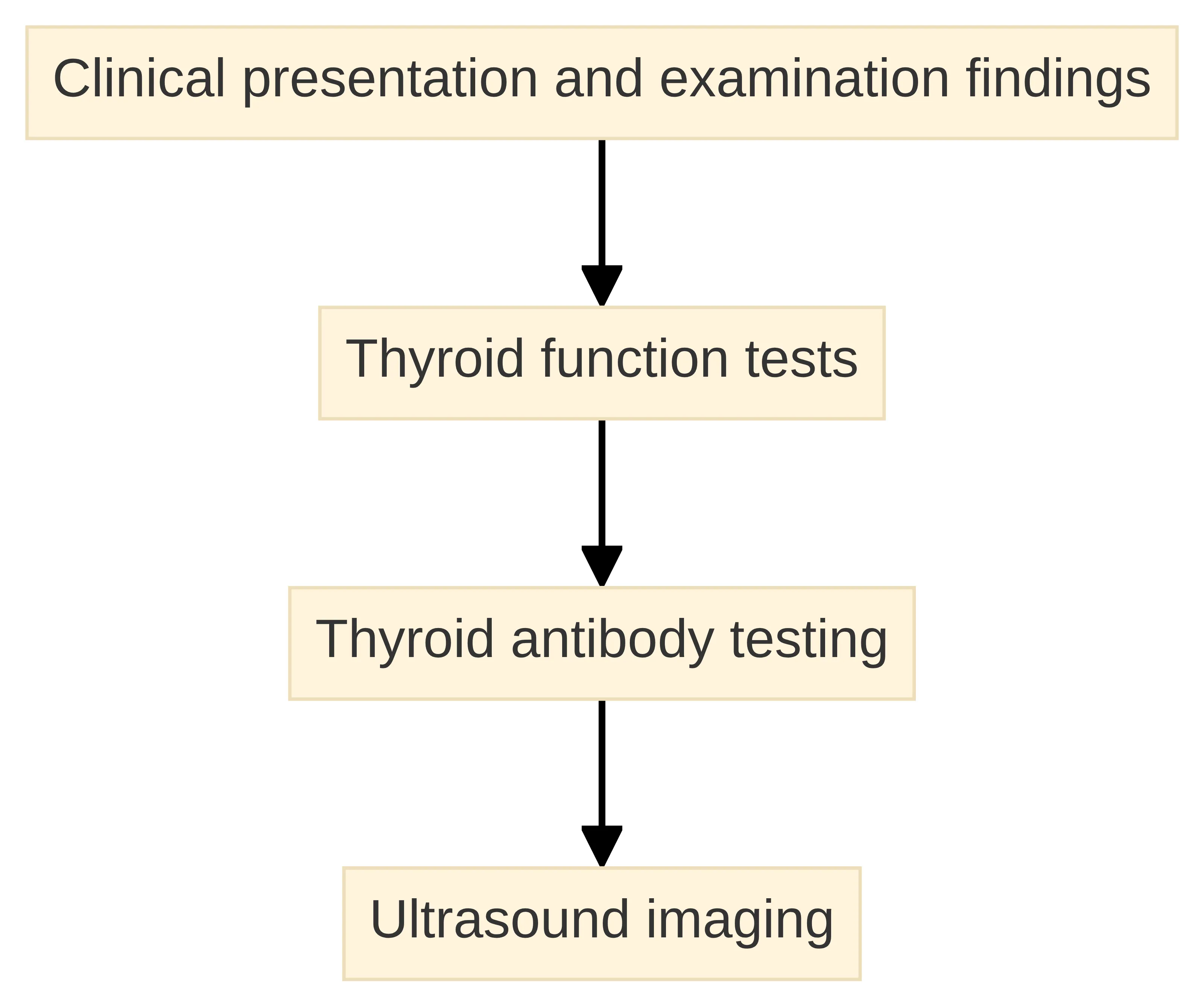
Evaluation of suspected Hashimoto’s thyroiditis may combine several types of information. The clinician may use symptoms, examination findings, laboratory measurements, and imaging to address different parts of the question.
A suspected Hashimoto’s thyroiditis evaluation may include these components:
- Clinical presentation and examination findings: Your symptoms and physical findings provide the starting context.
- Thyroid function tests: These measurements address how the thyroid is functioning.
- Thyroid antibody testing: Evaluation may include anti-thyroid peroxidase and anti-thyroglobulin antibodies, along with other serum thyroid-related measurements when appropriate.
- Ultrasound imaging: An ultrasound may add information when the clinical situation calls for it.
The purpose is to interpret these findings together, not to turn one result into an automatic conclusion.
The exact combination of assessment steps depends on the question being evaluated. A clinician may be considering thyroid function, autoimmune activity, enlargement, or another explanation for the findings. Ask what each proposed test is intended to clarify and how the result would affect the next discussion.
An appointment preparation list can include your main symptoms, relevant changes, and questions about testing. Ask how follow-up appointments, blood tests, and monitoring visits will work, what those visits will involve, and who will arrange them. Clear questions can help you understand both the evaluation and what happens after results are available.
A test result becomes more useful when you know its purpose and its next decision point. Ask what the result measures, whether it changes the need for another assessment, and when the result will be discussed with you. This keeps a laboratory number or image connected to a clinical question rather than leaving you to interpret it alone.
Why one antibody or measurement is not the whole diagnosis
A thyroid antibody or other measurement answers a narrower question than a complete clinical evaluation. Antibody findings relate to immune activity, thyroid function tests relate to thyroid performance, examination findings may identify enlargement, and symptoms describe your experience. These layers overlap, but they are not substitutes for one another.
Evaluation of Hashimoto’s thyroiditis may include thyroid antibodies and thyroglobulin measurements, while broader assessment may also include clinical presentation, thyroid function tests, and ultrasound imaging when appropriate. The distinction matters because a single laboratory result cannot describe every layer of the condition. Ask what a measurement means in relation to the rest of your findings.
A four-question checklist can keep the discussion clear:
- What does this result measure?
- Does it address thyroid function, immune activity, structure, or symptoms?
- What other findings need to be considered alongside it?
- What follow-up would make sense if the results and symptoms do not match?
This approach keeps uncertainty visible without turning uncertainty into a diagnosis.
A thyroid antibody result and a thyroid function result can both be relevant while still describing different parts of your health picture. One may relate to immune activity and the other to gland function. Ask your healthcare professional to explain whether the results point in the same direction and what an apparent mismatch means for evaluation.
What management and monitoring discussions may cover
Management discussions depend on the findings, including whether reduced thyroid function is present. Levothyroxine replacement is the primary treatment approach described for Hashimoto’s thyroiditis. That general information does not determine whether treatment is appropriate for you, which medication would be used, or what dose would be suitable.
Monitoring discussions may cover how often you need follow-up appointments, blood tests, and other treatment-monitoring visits, as well as what each visit involves. Ask who will arrange follow-up, what changes should prompt contact, and how results will be explained. The schedule is part of the care conversation rather than a detail to guess from one test. Monitoring can answer different follow-up questions, so ask what the plan is meant to track. It may be intended to review thyroid function, revisit symptoms, discuss the meaning of an antibody or other finding, or determine whether another assessment is appropriate. Ask what changes should prompt contact before a planned visit and how results will be communicated. If your symptoms and test results do not seem to point in the same direction, ask which findings should be reviewed together and whether another specialist should be involved. This keeps monitoring tied to the clinical question instead of treating a repeated measurement as a complete explanation.
Food, supplements, and over-the-counter medicines can also be useful topics for a thyroid-care discussion. Ask which products may affect your care, whether any should be used or avoided, and whether timing matters. Do not rely on a general online list to decide what belongs in your own plan.
Persistent symptoms deserve a specific conversation when thyroid hormone levels are in the normal range. Ask how symptoms will be monitored, whether another specialist may be appropriate, and whether other medical conditions could affect the picture. The goal is a coordinated explanation of the findings rather than automatic escalation based on symptoms alone.
A management conversation should also cover what you are expected to do between visits and how questions will be handled. Ask for an explanation of any recommended thyroid care that you do not understand, including the purpose of monitoring and the timing of follow-up. Understanding the plan is separate from deciding whether the plan is appropriate for you.
Questions to bring to a healthcare professional
A prepared question list can help you decide whether professional evaluation is the right next step and make the appointment more focused. Choose the questions that match your concern, then leave space to record the answers.
Questions for a healthcare professional can include:
- About the concern: Could my symptoms or examination findings fit a thyroid condition, and what does the evaluation need to clarify?
- About function: Which thyroid function tests are relevant, and what question does each test answer?
- About autoimmunity: Are thyroid antibody tests appropriate, and how would their results be interpreted with my other findings?
- About structure: Is ultrasound imaging appropriate, and what would it add to the assessment?
- About symptoms: If my thyroid hormone levels are normal but symptoms continue, what should we consider discussing next?
- About monitoring: How often might I need follow-up appointments, blood tests, or other monitoring, and what will those visits involve?
- About daily care: Which foods, supplements, or over-the-counter medicines may affect thyroid care, and does timing matter?
- About coordination: Could a thyroid condition affect another condition I have, and should another specialist be involved?
An appointment question list is most useful when you bring it to the visit and write down the answers in plain language. You can ask for an explanation of any thyroid condition or recommended care that you do not understand. Asking for clarification is a practical part of making an informed decision about evaluation and follow-up.
A short priority list can keep the conversation manageable if you have many concerns. Start with the symptom or finding that affects you most, then ask what the proposed evaluation is meant to clarify and how follow-up will be handled. Finish by asking what questions you should bring back if symptoms continue or results do not match your experience.
Request help with an order
A follow-up conversation can clarify what each result measures, what remains uncertain, and what monitoring would involve. A qualified healthcare professional must decide whether the findings support a diagnosis or a particular management plan for you. Use the appointment to make that decision with appropriate clinical context rather than diagnosing yourself.
Questions readers commonly have about Hashimoto disease
How do healthcare professionals evaluate suspected Hashimoto disease?
Evaluation typically involves assessing symptoms, conducting thyroid function tests, measuring thyroid antibodies, and possibly using ultrasound imaging to gather a comprehensive view of thyroid health.
When should I contact a healthcare professional about my thyroid health?
You should reach out if you experience persistent symptoms, changes in your health, or if you have concerns about thyroid enlargement or function.
What questions should I ask my healthcare provider regarding Hashimoto disease?
Consider asking about the relevance of your symptoms, the purpose of specific tests, how often follow-up appointments are needed, and what lifestyle changes may support your thyroid health.
Can Hashimoto disease cause symptoms even when thyroid hormone levels are normal?
Yes, some individuals with Hashimoto disease may experience symptoms despite having normal thyroid hormone levels, indicating the need for a comprehensive evaluation.
Hormone therapy
Wondering if your hormones are behind how you feel?
Dr. Brian Hoff sees patients at our boutique, cash-based practice in downtown Fredericksburg, VA — with time to listen and a plan built around you.
More on Hormone Therapy & BHRT
See hormone therapy Hormone Therapy & BHRT
Hashimoto Disease: What It Means, How It Is Evaluated, and When to Seek Care
Learn what Hashimoto disease means, how thyroid function is evaluated, and which questions to bring to a healthcare professional.
Read article Hormone Therapy & BHRT
Hashimoto’s Disease: Symptoms, Evaluation, and What to Discuss With a Healthcare Professional
Learn what Hashimoto disease is, how thyroid function can vary, what evaluation may involve, and what to ask a healthcare professional.
Read article Hormone Therapy & BHRT
10 Benefits of Hormone Replacement Therapy Near You
Discover the transformative benefits of hormone replacement therapy near me for enhanced well-being.
Read article